Casino Resorts Around the World: How They Differ from Ordinary Casinos
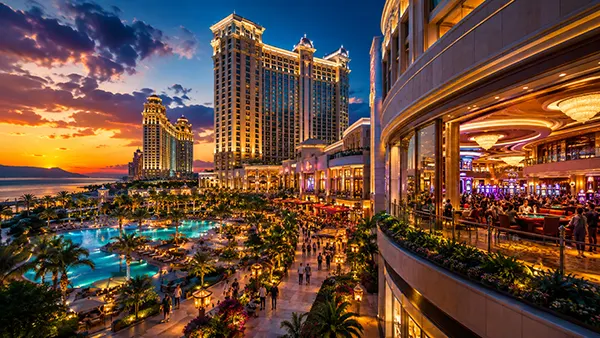
A casino resort is designed as a complete travel destination rather than a building centred mainly on gaming. It normally combines a licensed casino with hotel accommodation, restaurants, bars, live entertainment, shopping, wellness facilities, pools, event spaces and other leisure attractions. A stand-alone casino may offer several of these services, but most visitors go there for a few hours and leave the same day. At a resort, the stay can last several nights, and gaming may account for only one part of the itinerary. This difference affects the scale of the property, the way guests plan their time, the range of people it attracts and the final cost of the trip. It also means that two people can stay at the same property for very different reasons: one may book for a concert or conference, while another may be interested mainly in gaming. As of 2026, leading examples in Las Vegas, Macao, Singapore, Manila and the Bahamas show that the casino-resort model can vary widely, yet its central idea remains consistent: accommodation, entertainment and gaming are managed as parts of one destination.
What Turns a Casino into a Full Resort
The clearest distinction is accommodation. An ordinary city casino can operate successfully without a hotel because it relies on local residents, day visitors or tourists staying elsewhere. A casino resort expects a significant share of guests to sleep on the property, often in one of several hotel towers or room categories. This changes the entire visit. A guest may arrive in the afternoon, use the pool or spa, eat at a restaurant, attend a performance and spend only part of the evening on the gaming floor. The following day may be devoted to shopping, a theme park, golf, a beach or a business event. The casino remains important, but it no longer defines every hour of the stay. This is why resort booking pages usually give equal prominence to rooms, dining, performances and leisure facilities. In practical terms, the holiday can still work for companions who do not gamble, provided the non-gaming offer is strong enough.
Scale is another major difference. Large resorts need enough space for guest rooms, kitchens, theatres, meeting halls, retail areas, transport points, service corridors and staff facilities. Many are arranged almost like compact districts, with several entrances and long internal walking routes. This can be convenient because visitors do not need to organise separate transfers between a hotel, restaurant and evening venue. It can also be tiring for guests with reduced mobility or families with young children. Resort maps, accessible routes and the position of lifts may therefore matter almost as much as the distance between the hotel and the casino. Large properties may also operate separate check-in desks, shuttle stops and parking areas for different towers, so checking the exact room location can prevent unnecessary walking and delays.
The commercial model is broader as well. A stand-alone casino typically earns most of its revenue from gaming, supported by food, drinks and occasional events. A resort can earn money from rooms, restaurant bookings, retail leases, concerts, conferences, spa treatments, attraction tickets and premium services. This gives the operator more ways to attract visitors who do not gamble at all. It also explains why some modern casino resorts present the gaming area discreetly rather than making it the visual centre of every public space. Families, conference delegates, diners and entertainment audiences can use many parts of the property without entering the casino. The wider range of income sources can also support free public attractions, seasonal displays or lower-priced activities that bring people into the resort even when they have no intention of playing casino games.
Hotels, Attractions and Entertainment in Real Resorts
Bellagio in Las Vegas illustrates the classic Strip model. The property combines a hotel and casino with restaurants, pools, a spa, shops and large-scale entertainment. Its lake and fountain show function as a public attraction, while the Bellagio Conservatory and Botanical Garden, the Gallery of Fine Art and the resident production “O” by Cirque du Soleil give visitors reasons to attend without gambling. This mix is very different from a conventional casino whose main public areas consist of gaming tables, electronic machines, a bar and perhaps one restaurant. Bellagio is still strongly associated with casino play, but its identity also depends on architecture, performances, dining and visual attractions. Its location on the Strip adds another layer: guests can use Bellagio as a base while visiting neighbouring resorts, which makes the surrounding district part of the overall experience rather than keeping every activity inside one building.
The Venetian Macao demonstrates how far the model can expand. The hotel has 3,000 suites, while the connected shopping area contains hundreds of shops arranged around Venetian-style streets and canals. The resort also includes restaurants, leisure facilities and the Venetian Arena, which hosts major concerts and events. Guests may spend most of a day moving between accommodation, shopping, dining and entertainment before visiting the casino. Its scale also reflects the Cotai approach to tourism, where very large properties are built to keep visitors on site for longer stays and to serve both leisure groups and business events. The all-suite format further separates it from a basic casino hotel, as accommodation itself is treated as a major product rather than a simple place to sleep after gaming.
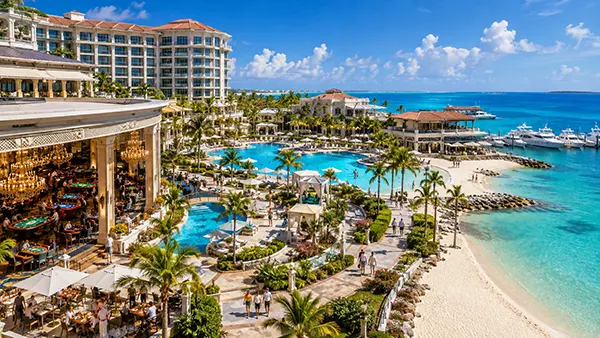
Other regions place even more emphasis on family attractions. Resorts World Sentosa in Singapore covers 49 hectares and includes eight hotels with more than 1,000 rooms, Universal Studios Singapore, Adventure Cove Waterpark and Singapore Oceanarium alongside its casino. Atlantis Paradise Island in the Bahamas combines five hotels with Aquaventure, beaches, pools, marine experiences, restaurants and a casino. Okada Manila adds extensive dining, shopping, wellness facilities, family entertainment and a 37,464-square-metre dancing fountain to a large gaming operation. These examples show that a casino resort can compete with theme parks, beach holidays and urban luxury hotels at the same time. They also show why the casino may be physically separated from family attractions: the resort wants to serve several audiences while maintaining controlled access to the gaming floor.
How Casino Resort Experiences Vary by Region
Las Vegas remains the best-known example of a destination built around clusters of casino resorts. Properties on the Strip compete through hotel design, restaurants, headline shows, nightclubs, pools, exhibitions and conference facilities as much as through gaming. Visitors can move between neighbouring resorts, so each property must offer a recognisable identity. One may be known for a fountain, another for a theatre production, a large pool complex or a particular group of restaurants. This creates a trip based on variety: guests often stay in one resort but eat, attend shows or gamble in several others during the same visit. Conventions are another important part of the Las Vegas model. Large meeting spaces can fill hotel rooms on weekdays, while concerts, sport and leisure demand may be stronger at weekends.
Macao follows a different pattern. Large Cotai resorts place considerable weight on spacious hotel accommodation, luxury retail, premium restaurants, arenas and extensive gaming floors. The market has historically been closely linked to casino tourism, but current resorts also promote concerts, exhibitions, family activities and meetings. The Venetian Macao’s 3,000 suites and extensive shopping areas demonstrate the size of this model. Unlike many Las Vegas visitors, who frequently walk between nearby properties, guests in Macao may spend longer within one connected resort complex or use organised transport between major Cotai destinations. The indoor scale is especially useful in hot, humid or rainy weather, but it can make distances difficult to judge from a map. A restaurant described as being “within the resort” may still be a considerable walk from a particular hotel lift.
Singapore uses the integrated-resort model within a tightly controlled regulatory system. Marina Bay Sands combines a hotel, rooftop pool, observation areas, shopping, restaurants, events and a four-level casino with roughly 600 tables and 3,000 electronic gaming machines. Resorts World Sentosa places major family attractions beside hotels, dining and gaming. In Manila, Okada Manila uses entertainment, dining and its large fountain as central features. In the Bahamas, Atlantis links casino gaming to beaches and a water park. These regional differences matter because the same term can describe an urban luxury landmark, a family holiday complex, a beach resort or a large entertainment district. Travellers should therefore look beyond the label and identify the property’s real emphasis. Some resorts are designed mainly for nightlife and premium dining, while others give more space to children’s attractions, outdoor recreation or organised events.
Local Laws Shape Access and Guest Behaviour
Casino access is never governed only by the resort’s own house rules. National and regional laws determine who may enter, how identity is checked, which games can be offered and what responsible-gambling controls must be available. Singapore provides a clear example. Citizens and permanent residents must pay an entry levy of S$150 for 24-hour access or S$3,000 for an annual levy. The measure is intended as a social safeguard and does not apply in the same way to foreign visitors. A holidaymaker can therefore use the hotel, restaurants, attractions and shops under ordinary visitor conditions while casino entry follows a separate set of requirements. The levy also shows that a resort can be promoted as a major tourism asset while gambling remains subject to targeted domestic safeguards.
Macao prohibits people under the age of 21 from entering casinos, and operators must control access at the entrance. Comparable age and identity rules apply in other jurisdictions, although the exact limits differ. This separation is especially important at family-oriented resorts. Children may stay in the hotel, visit restaurants, attend attractions or use pools, but they cannot pass through restricted gaming areas. Parents should study the property layout before booking because some routes, evening activities or dining venues may be less practical when adults are travelling with minors. They should also confirm age rules for shows, pools, clubs and late-night restaurants, as these can be separate from the legal age for entering the casino.
Rules can also affect smoking areas, alcohol service, photography, cash transactions, loyalty accounts and self-exclusion. These details are not identical across Las Vegas, Macao, Singapore, the Philippines or the Caribbean. A resort’s international image does not replace local law. Guests should therefore check the official casino-entry conditions shortly before travelling, especially when a passport, levy payment, dress standard or membership registration may be required. The hotel and casino may share one name, but booking a room does not automatically guarantee entry to the gaming floor. Entry conditions can also change more quickly than hotel descriptions, so the regulator’s website and the property’s current rules are more reliable than an old travel article or forum post.
What Guests Gain and What They Should Check Before Booking
The main advantage of a casino resort is convenience. Accommodation, meals, evening entertainment and leisure facilities can be arranged within one property, which reduces the need for repeated taxi journeys or complex daily planning. This is useful for short breaks, group trips and business events where travellers have different interests. One guest can attend a show, another can use the spa, and another can visit the casino before everyone meets for dinner. Large resorts also tend to offer longer opening hours and a wider choice of services than smaller casinos, although individual restaurants and attractions may still require advance reservations. This convenience is particularly valuable when weather is poor or when a group wants flexible plans without arranging transport for every activity.
Convenience does not always mean lower cost. The advertised room rate may exclude taxes, resort charges, parking, breakfast, attraction tickets or service fees. Restaurants inside major resorts can range from food courts to expensive tasting menus, and headline entertainment may cost more than the room itself. Guests should compare the total price of the stay rather than the first nightly rate shown. It is also worth checking cancellation terms, pool access, attraction access, deposit requirements and the distance from the room tower to the facilities that matter most. Package deals can provide good value, but only when the included attractions match the guest’s plans. A low room rate is less useful if mandatory charges and unwanted extras raise the final bill substantially.
A resort can also make spending feel less visible because room charges, meals, entertainment and gaming take place within one connected environment. A practical approach is to set separate budgets for accommodation, food, attractions and gambling before arrival. Gambling money should be treated as an entertainment expense, not as a way to recover the cost of the holiday. Loyalty benefits may reduce the price of rooms or meals for some guests, but they should not be used as a reason to extend play or exceed a planned limit. Official self-exclusion and limit-setting services are available in many regulated destinations for people who need stronger controls. Travellers should also avoid using money reserved for the hotel, transport or return journey. The fact that gaming is available close to the room does not make it less risky than a separate casino visit.
Choosing Between a Resort and a Stand-Alone Casino
A casino resort is usually the better match for travellers who want several days of organised entertainment in one location. It suits couples planning a luxury break, groups with mixed interests, conference visitors and families staying at properties where non-gaming attractions are a major part of the offer. The strongest reason to choose one is not simply the size of the casino. It is the ability to combine a hotel stay with dining, shows, pools, shopping, wellness or family activities without building a separate itinerary for every day. This can be especially useful for a celebration or group holiday because each person can choose different daytime activities and still meet easily for shared meals or evening events.
A stand-alone casino may be more suitable for a shorter and more focused visit. It can offer table games, electronic gaming, a restaurant and live events without the higher room rates or additional charges associated with a major resort. City-centre casinos may also provide easier access to local neighbourhoods, museums, independent restaurants and other hotels. Travellers who prefer to spend most of their trip away from the casino may gain more flexibility by staying elsewhere and visiting the gaming venue for one evening. A smaller venue may also be easier to navigate, quieter and less expensive, although it will usually have fewer restaurants, games and entertainment choices.
The final choice should be based on location, total cost, trip length, legal entry conditions and the interests of everyone travelling. Before booking, guests should check current hotel terms, renovation notices, attraction schedules and casino rules on official websites, as these can change during the year. A good casino resort should still be worthwhile when gambling is removed from the plan. If the hotel, food, entertainment and leisure facilities justify the journey on their own, the property is functioning as a genuine resort rather than simply a large casino with rooms attached. That test is useful because it focuses on the quality of the whole stay, not on marketing language or the size of the gaming floor.
Read also
-
 all articlesFrom Slots to Crash Games: How Online Casino Catalogues Are Changing in ...
Online casino catalogues in 2026 are noticeably broader than they …
-
 all articlesWhy a Larger Bonus Amount Does Not Always Mean Better Terms for the Player
A casino bonus is often presented through one prominent figure: …
-
 all articlesLeander Games – Famous online gambling player
Leander Games has built a recognisable position in online gambling …
-
 all articlesReview of Fire and Roses Joker Slot from Triple Edge Studios
Fire and Roses Joker is a 2023 online slot developed …